Lactose Intolerance: A Comprehensive and Easy-to-Understand Guide
by Pharmily · 17 Dec 2025

Lactose intolerance affects millions of people globally, yet many still struggle to understand the condition and how to manage it. Although it is not life-threatening, it can significantly affect your daily comfort and food choices.
This article explains lactose intolerance in simple, well-structured language while providing detailed insights that help you make informed decisions about your health.
What Is Lactose Intolerance?
Lactose intolerance refers to the inability to properly digest lactose, the natural sugar found in milk and most dairy products.
The condition occurs when the small intestine does not produce enough lactase, the enzyme required to break down lactose. Without sufficient lactase, undigested lactose moves into the colon, causing digestive discomfort.
What Causes Lactose Intolerance?
Lactose intolerance can result from several factors, and the causes vary from person to person.
First, primary lactose intolerance develops naturally with age as lactase production decreases. Many adults experience this form because the body shifts its nutritional needs after childhood.
Second, secondary lactose intolerance occurs when the small intestine becomes damaged due to infections, celiac disease, Crohn’s disease, or prolonged antibiotic use. The damage reduces lactase production temporarily or permanently.
Lastly, congenital lactose intolerance is a rare genetic condition in which babies are born without the ability to produce lactase.
Who Is at Higher Risk?
Some groups are more likely to experience lactose intolerance due to genetic and environmental factors.
Individuals of African, Asian, Middle Eastern, or Native American descent have higher rates of primary lactose intolerance. Moreover, people recovering from severe gastrointestinal infections or inflammatory bowel conditions may experience temporary intolerance.
Infants born prematurely also have a higher risk because their intestines may not yet produce adequate lactase levels.
Common Symptoms of Lactose Intolerance
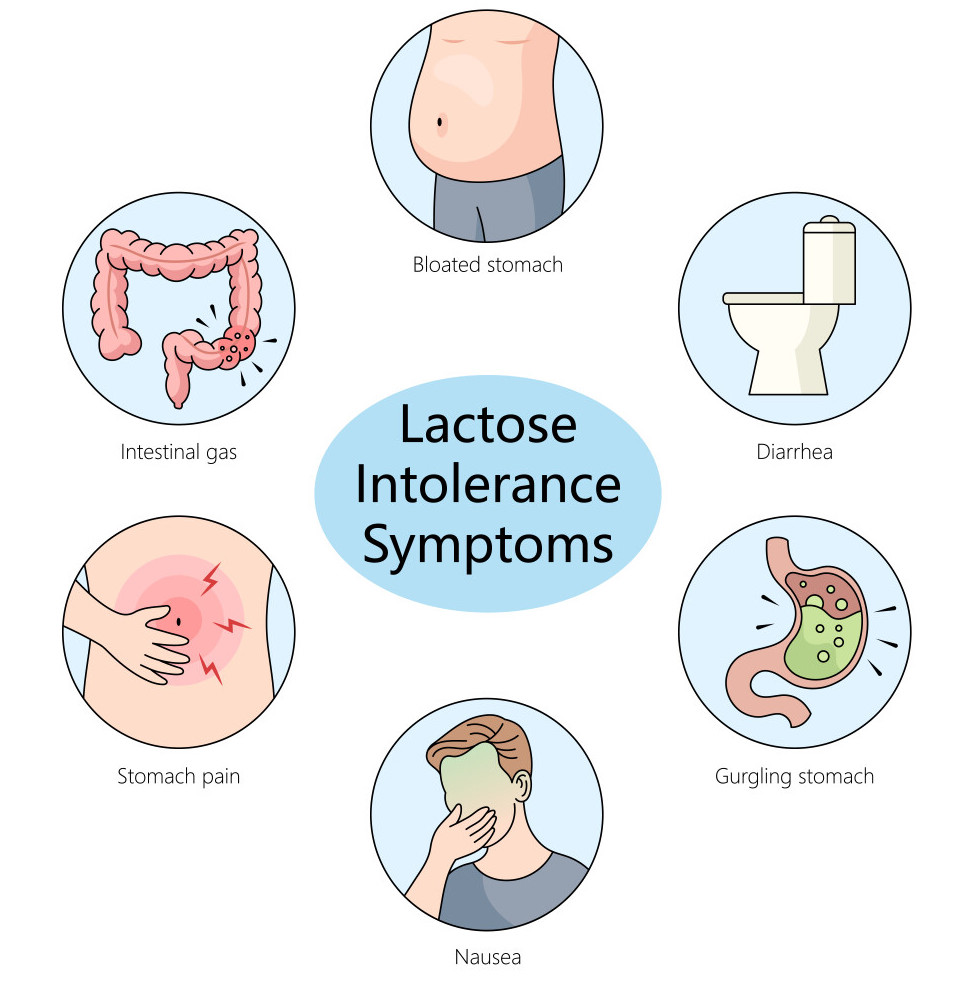
Many people notice symptoms shortly after consuming milk or dairy products.
You may experience bloating, which occurs when undigested lactose ferments in the colon.
Additionally, diarrhea happens when the body draws water into the gut to deal with unabsorbed lactose.
Other symptoms include stomach cramps, gas, and sometimes nausea. These symptoms usually appear within 30 minutes to 2 hours after consuming lactose-containing foods.
How Lactose Intolerance Differs From Milk Allergy
Many individuals mistakenly assume lactose intolerance and milk allergy are the same, but they differ significantly.
Lactose intolerance involves the digestive system, specifically the inability to break down lactose. In contrast, a milk allergy triggers an immune system reaction to milk proteins, which can be severe or life-threatening.
Symptoms of milk allergy include rashes, swelling, breathing difficulties, and in severe cases, anaphylaxis.
How Doctors Diagnose Lactose Intolerance
Healthcare providers diagnose lactose intolerance using various methods that assess how your body responds to lactose.
The Hydrogen Breath Test is the most common diagnostic tool. After drinking a lactose-rich liquid, the doctor measures hydrogen levels in your breath. High levels indicate improper lactose digestion.
Doctors may also use the Lactose Tolerance Blood Test or conduct an elimination diet, where you temporarily remove lactose from your meals to observe symptom changes.
Best Treatment Options for Lactose Intolerance
Although no cure exists, you can manage lactose intolerance effectively with proper strategies.
Many people adjust their diet by reducing or avoiding high-lactose foods, allowing their digestive system to remain comfortable. Others use lactase enzyme supplements, which help break down lactose during digestion.
Additionally, lactose-free dairy products offer the same nutrients as regular milk with minimal discomfort. Gradually reintroducing small amounts of dairy can also help your gut adapt.
Foods to Avoid When You Have Lactose Intolerance
Not all dairy foods contain equal amounts of lactose, so identifying high-risk foods helps reduce symptoms.
Milk, ice cream, yoghurt, cream, and soft cheeses like cottage cheese contain high lactose levels. These foods often trigger fast and noticeable symptoms.
Processed foods such as cereals, soups, salad dressings, chocolates, and baked goods may also contain hidden lactose, so reading labels becomes essential.
Best Lactose-Free Substitutes
Fortunately, you can still enjoy delicious meals with the many lactose-free alternatives available today.
Plant-based milks such as almond, soy, oat, coconut, and rice milk provide excellent substitutes for regular milk. They are easy to digest and offer unique flavours and nutrients.
Lactose-free cow's milk remains a good option for those who prefer dairy but need digestion support. You can also find lactose-free cheese, butter, yoghurt, and cream in most supermarkets.
Managing Lactose Intolerance in Children
Children with lactose intolerance require special attention to ensure they receive essential nutrients.
Parents should offer lactose-free dairy options or fortified plant-based milk rich in calcium and vitamin D. Observing how children react to different foods helps in planning safe and enjoyable meals.
It is also helpful to consult a paediatrician before making major dietary changes.
How to Maintain Strong Nutrition Without Dairy
A lactose-free diet should still support strong bones and overall health.
You can include calcium-rich foods such as broccoli, kale, sardines, almonds, fortified juices, and legumes. These options provide the nutrients the body needs without causing discomfort.
Vitamin D supplements may also help individuals who consume fewer dairy products.
Living Comfortably With Lactose Intolerance
Living with lactose intolerance requires a combination of awareness, smart dietary choices, and consistency.
Keeping a food diary helps you track which foods trigger symptoms. You can then adjust your diet based on your observations.
Staying informed about product labels and new lactose-free food options makes daily eating easier and more enjoyable.
FAQs
1. Can lactose intolerance go away?
Lactose intolerance usually persists throughout adulthood, but symptoms can vary. Some people regain tolerance after treating the underlying cause of secondary lactose intolerance.
2. Can I eat cheese if I am lactose intolerant?
Yes, some cheeses contain low lactose levels. Hard cheeses like cheddar, parmesan, and Swiss are usually easier to digest.
3. Is lactose intolerance dangerous?
No, it is not dangerous, but it can affect comfort. The symptoms may impact your daily activities if not managed properly.
4. What happens if I continue taking dairy?
You may experience bloating, cramps, diarrhoea, and gas. The severity depends on how sensitive you are.
5. Is yoghurt safe for lactose-intolerant people?
Some yoghurt brands contain live cultures that help break down lactose. These may be more tolerable for some individuals.